Inca Cosmology: Connecting Earth and Sky

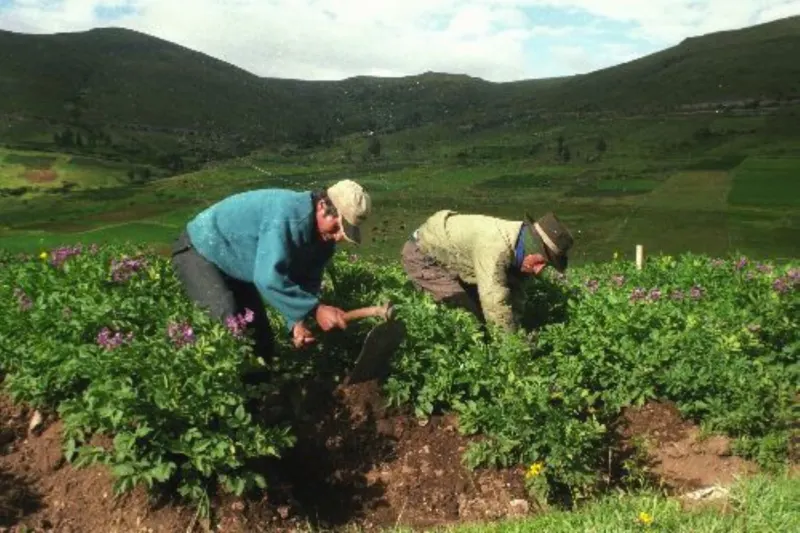
Five hundred years ago on an Andean ridge, the sky was not background scenery. It was a working document that told you when to plant, when to expect rain and when the llamas would give birth. People who figured that out were not mystics. They were farmers trying not to starve at 3,500 meters above sea level.

That is the starting point for inca cosmology. Not temples, not mythology, not religion in the way most people mean that word. A practical system built around one central problem: survival in a landscape that could kill a harvest overnight with frost and dry one out completely the following month.

inca cosmology

Sumary

The sun worshipper label gets thrown around a lot and it misses almost everything. Inti mattered, but he was one piece of something much larger. The full picture connects rivers, mountains, ancestors, stars and soil into a single framework where everything depends on everything else. That framework is worth understanding on its own terms.

Yanantin: Partners, Not Enemies

Most cultures frame the world as a conflict. One side wins, the other loses. The Andean version of things worked differently. Yanantin held that opposing forces needed each other to function, the way two hands need each other to carry something heavy.

A mountain peak and the lake at its base. Dry season and wet season. Neither one the enemy of the other. Both necessary, and the community’s job was maintaining the relationship between them, not picking a side.

Cusco was built around this logic. The city split into Hanan, upper, and Hurin, lower. Those two halves shared water, celebrated harvests together, intermarried across the line. The division was not symbolic. It created real mutual dependence. Neither half survived without the other, which made serious conflict between them structurally impractical.

That same thinking ran through everything in inca cosmology. Agriculture, governance, spiritual practices, city planning. Everything had a counterpart and needed it. Sites like Ollantaytambo, where temple and agricultural terrace faced each other across the valley floor, made this logic visible in stone.

Three Realms, Three Animals

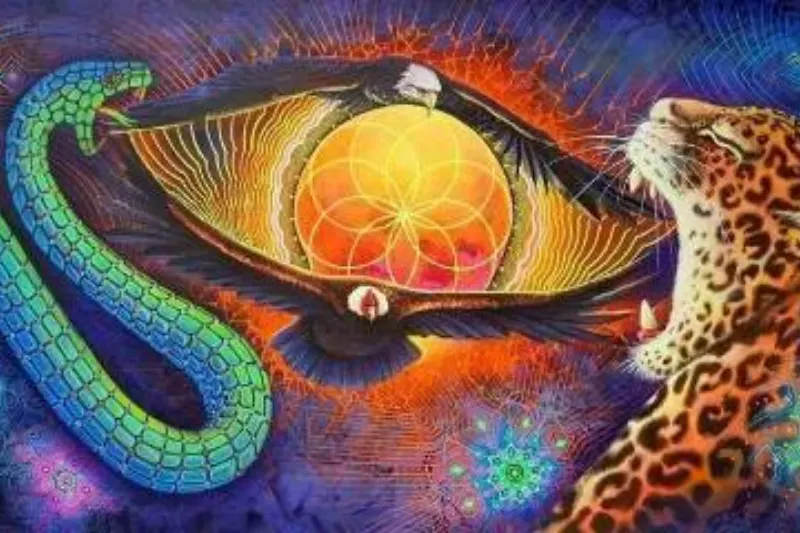
The vertical universe in inca cosmology had three layers, and each one came with an animal that defined what that space was about.

Hanan Pacha sat above everything else. Stars, weather, whatever came next. The condor belonged here, not as a god but as something closer to a courier, the only creature that could physically reach that altitude and move between the human world and whatever existed beyond the peaks.

Kay Pacha was the present. The middle world where crops grew or died, where buildings held or fell in earthquakes, where daily choices had daily consequences. The puma lived here. Not as a symbol of violence but of the steady, focused strength that high-altitude farming actually demanded from people.

Uku Pacha was below the soil. Spanish missionaries arrived, misread it as hell, and wrote that down. The misreading stuck. It was not hell. Seeds germinated there. Groundwater moved through it. Ancestors rested in it. The snake was its animal because a snake sheds its skin and keeps going, which was exactly how the Andean mind understood death, renewal, and the turning of seasons.

Energy moved between all three zones at specific points in the landscape. A cave, a hot spring, a rock that lightning had struck. These threshold places, tinkuys, were where an offering made today could reach downward to the ancestors or upward toward the stars. The terraced hillsides of Pisac, carved directly into the living mountain, concentrated several of these thresholds in one place.

inca cosmology

Viracocha, Inti, and the Solar Lineage

The creation story in inca cosmology starts at Lake Titicaca. Viracocha rose from those waters, shaped the earth, populated it, then stepped back. Before leaving, he sent the sun up from the same lake. That produced Inti, the solar figure who became the most practically important of all inca deities.

Inti was not a distant figure. He was the reason terraced fields at impossible altitudes produced food at all. His path across the sky told farmers when to plant. His angle told engineers how to orient buildings to hold heat through Andean winters. The Coricancha temple in Cusco had windows cut to catch specific solar alignments at the solstices. Not decoration. Demonstration. The ruler knew the sky, which meant the sky confirmed the ruler.

The Sapa Inca was Inti’s direct descendant, at least in the framework that organized the empire. That made political decisions cosmic ones. Expansion was not described as conquest but as spreading solar order. Whether people believed this literally is a separate question. As a governing framework for millions of people across brutal terrain, it worked. Inti Raymi, the festival of the sun celebrated each June solstice, dramatized this relationship publicly, gathering thousands to reaffirm the bond between the ruler, the deity, and the agricultural cycle.

Ayni: The Law Everything Ran On

Every inca ritual, every offering, every act of ceremonial labor in inca cosmology traced back to ayni. Reciprocity. You take, you give back. Simple as a concept, demanding in practice.

Pachamama was not abstract. She was the field outside the door that could bless a family with potatoes or freeze them out without notice. That unpredictability was real and it shaped everything about how communities related to the land.

Pagos a la tierra, payments to the earth, were how the debt got settled. Ceremonial bundles with specific materials:

  • Coca leaves: A direct line to the spiritual realm, used in prayer and offering.
  • Chicha: Corn beer poured onto the ground, liquid returned to the source that made it.
  • Animal fat: Warmth returned to soil that spent months frozen solid.

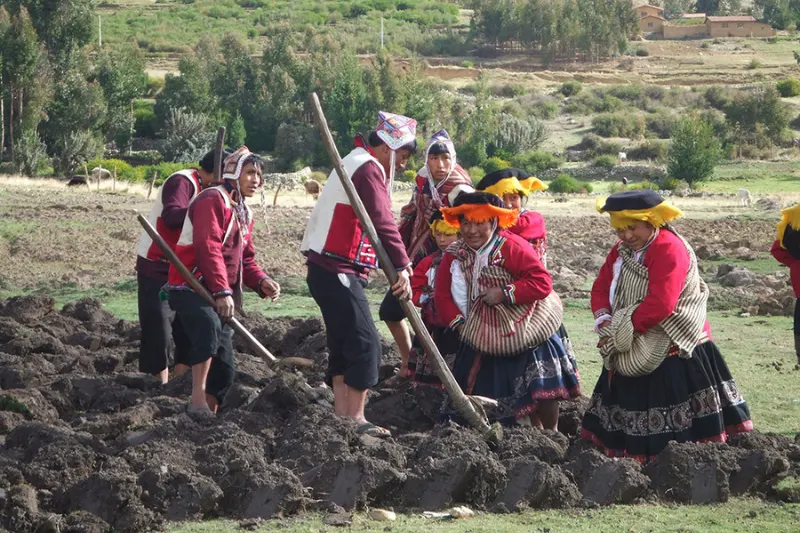
The ecological logic here is not complicated. A community that treats the mountain as a living creditor does not strip it bare. A farmer who owes a debt to the soil manages it differently than one treating it as a passive input. Ayni was land management dressed in spiritual language, and it fed an empire for centuries. The Queswachaka rope bridge, rebuilt each year by surrounding communities through collective labor, is one of the clearest surviving demonstrations of ayni still functioning in practice.

inca cosmology

Reading the Dark Sky

Most astronomical traditions connect bright stars into shapes. Andean astronomers focused on the dark spaces between them.

The Milky Way was Mayu, a river in the sky that mirrored the Urubamba below. It carried water from earth to sky and returned it as rain. The thick dark bands cutting through it were not gaps. They were figures, dark cloud constellations made from interstellar dust, animal silhouettes that marked the time of year.

The most prominent was Yacana, a mother llama stretched across the dark patches of the Milky Way with a calf underneath her. When Yacana rose or set at particular points in the year it signaled specific agricultural events. Reading the sky this way was as reliable as any written calendar, just encoded differently.

The Intihuatana stone at Machu Picchu connected to all of this. Its name means the hitching post of the sun. Priests tracked solstices through its shadows and symbolically anchored Inti to the earth during the coldest months when his absence would have been catastrophic for crops. The spiritual practices around the stone and the astronomical observations were the same activity, not two separate things.

Chakana and Ceque Lines: Sacred Geography at Scale

Running an empire that stretched from modern Colombia to Chile across the Andes without paper maps or long-distance communication required a different kind of infrastructure.

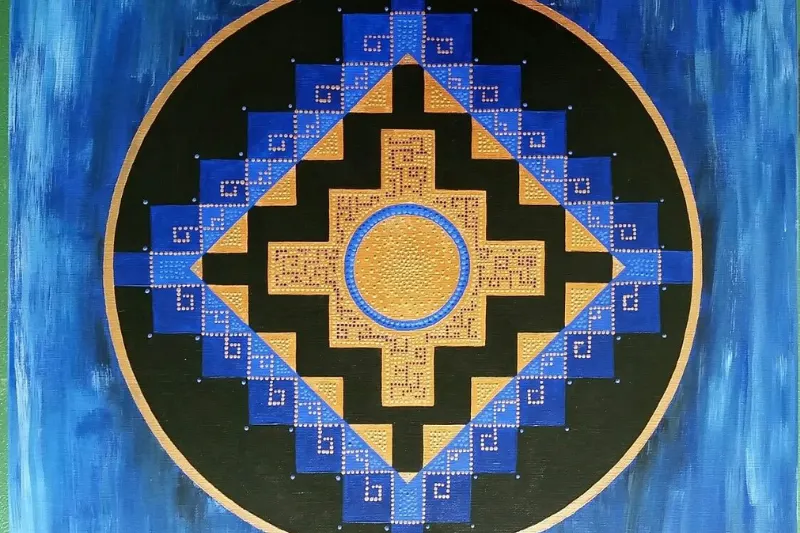
The chakana, the stepped cross carved into stone walls across the Inca world, compressed the whole system into one symbol. Three tiers for three realms. Twelve outer points for twelve months. A hole at the center where energy moved between dimensions. A portable version of the entire worldview small enough to carve on a wall.

That symbol was then scaled up. From the Coricancha in Cusco, ceque lines radiated outward across mountains and valleys for hundreds of miles. Along each line sat huacas, sacred sites that could be a built temple, a specific boulder, a spring, or a cave where ancestors were known to rest. Saqsayhuaman, the massive ceremonial complex above Cusco, sat at one of the most significant of these nodes, where multiple ceque lines converged at the edge of the city.

Families were assigned huacas to maintain. Regular offerings, ceremonial visits timed to the agricultural calendar, basic upkeep. Distributing those duties across the population turned the landscape into managed civic infrastructure. Sacred geography was also how water rights were administered and how communities across enormous distances stayed in relationship with each other. The Inca Trail itself was part of this network, a pilgrimage and administrative route threading through the Sacred Valley and connecting huacas across the highlands. The whole empire was a walkable calendar and a property system at the same time.

inca cosmology

Why Any of This Still Matters

Inca cosmology did not end when the empire did. Quechua communities across the Andes still make offerings to Pachamama as part of ordinary daily life. Not as performance. Not as tourism. As something that makes practical sense to the people doing it.

The core idea, that extraction creates a debt and the debt is real whether acknowledged or not, is one that contemporary ecology keeps arriving at through different routes. The Inca got there by watching the same mountains and rivers long enough to understand what happened when the balance broke. Remote sites like Waqrapukara, a horn-shaped fortress rising from a canyon in Canas, show how far that logic extended, placing sacred architecture at the edges of the known world, not just at its centers.

Applying ayni as a framework does not require adopting specific spiritual practices or inca rituals. It just requires taking seriously the idea that the land participates in human survival rather than simply enabling it. That is not a mystical claim. It is a description of how ecosystems actually function, written in different language by people who had been paying close attention for a very long time.

Q&A

Was Inca religion just sun worship?

No. Inti was central but functional. Inca cosmology connected solar observation, agricultural timing, political authority, and ecological reciprocity into one system. The sun mattered because it made food grow at altitude. Everything in the system pointed back to that practical fact first.

What is yanantin?

The principle that opposing forces complete each other rather than fight. It shaped how cities were built, how agriculture was understood, and how governance worked. Cusco was divided into two halves that depended on each other. Dry seasons and wet seasons were partners, not problems.

Are the three realms like heaven, earth, and hell?

Not in the Western sense. Hanan Pacha, Kay Pacha, and Uku Pacha are zones of time and energy. Uku Pacha is fertile and renewing. Ancestors rest there alongside germinating seeds. Energy moves between all three at threshold places in the landscape called tinkuys.

What is ayni and how was it practiced?

Reciprocity. Every act of taking from the environment created a debt repaid through inca rituals called pagos a la tierra. Coca leaves, chicha, and animal fat returned to the soil what had been taken from it. Spiritual practice and land management at the same time.

How did sacred geography and inca cosmology organize the empire?

The chakana encoded the whole cosmological system in a single carved symbol. Ceque lines radiated from Cusco to hundreds of huacas across the empire. Families maintained assigned sacred sites through regular offerings and ceremonial visits, turning the entire landscape into civic and spiritual infrastructure that functioned simultaneously.