Cusco Local Markets: Complete Visitor Guide

Visualize the fresh fruit and spice smell in the air. Imagine bright handwoven blankets heaped up and people selling in Spanish. It is not just Cusco shopping. It is the heart of the city of life. Here, culture fills every corner of Cusco local markets. To most travelers, this is what they are actually after.

Nevertheless, first-time travelers are usually overwhelmed with the liveliness of the local markets in Cusco. So, where should you begin? Where do you find the true treasures amongst all the malls of souvenirs? In spite of the fact that authentic finds lie in an open field, you require an easy strategy. You can have an adventure with the right attitude and not get frustrated.

This advice to the ideal Cusco markets. You will find out where to shop genuine alpaca fabrics and where to find safe and tasty food stands. Additionally, you will also be able to connect to the culture of the locals outside the tourist trail. Brace yourself in a journey that would be fulfilling and memorable.

San Pedro Market: Cusco’s Must-Visit Central Hub

cusco local markets

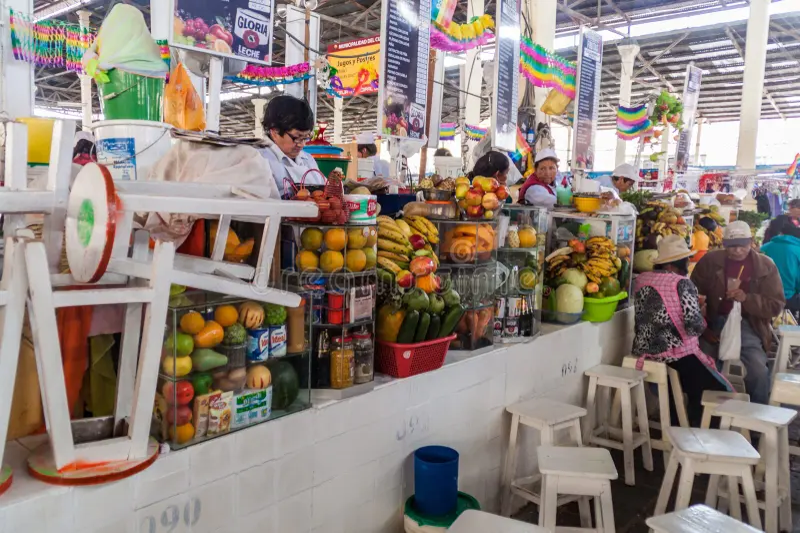
The first thing that strikes you as you enter San Pedro Market is the sights, smells, and sounds. Nevertheless, rather than being confused, consider it as a mini-community that is a single roof. It is the daily shopping place of the locals, and it has a lively ambiance where foreigners visit. The fresh produce is offered, the quick meals are located, and the souvenirs can be purchased in a single location.

Exploring efficiently, one should begin along the entrance. Merchants there peddle colored fabrics, stuff made of alpaca, and minor crafts. Then, penetrate to a deeper level of the market. There will be exotic fruits, hundreds of types of potatoes, huge local cheese wheels. Lastly, there are ready food stands and well-liked juice shops in the back.

To make sure that you do not get lost, first walk around the perimeter. This plan assists you in knowing the layout and the points that you would revisit. Then make your way into the crowded aisles without fear. The real splendor about this market is its genuineness. You are shopping side by side with local families and observing day-to-day life. At this point you are prepared to experience the unbelievable tastes of Cusco.

How to Eat Safely and Deliciously at the San Pedro Market

Many visitors wonder if it’s safe to eat at Cusco markets. The answer is yes—if you know what to look for. First, follow the locals. Choose stalls with steady lines of Peruvians ordering and eating. A busy vendor uses fresh ingredients and serves food quickly. This gives you the best chance for a safe and delicious meal.

Once you locate a nice place, find out the local food of the market. The following are the three least risky variants to consider:

  • Fresh juices (Jugos): There is a rainbow of fresh fruit in the juice section. Indicate the fruits that would be desired to be blended. The vendor will be prompted to know whether you would like the con agua light juice or con leche smooth creamy.
  • Grilled Corn with Cheese ( Choclo con Queso): This is a simple Peruvian snack with large tender corn pieces that are cooked with a slice of salty fresh cheese. It is easy, tasty and appetizing.
  • Empanada Baked: These savoury pastries are a great handheld meal. They are stuffed with meat, cheese or vegetables made by vendors. 

Once you are satisfied with the authentic flavours, you will be prepared to take the next attraction which will be the souvenir shopping. The artisan markets in the city of San Pedro are varied, unlike presenting a range of gift shopping.

Artisan Shopping: San Blas Market vs. The Centro Artesanal

While San Pedro sells plenty of textiles, As San Pedro is selling a lot of textiles, Cusco has two markets, which deal with artisanal products. It is up to you whether you want one of a kind artwork or you want to get a few alpaca hats to give out to friends back home.

cusco local markets

In case you love art, go to the San Blas bohemian neighborhood. Its stores and mini-market are galleries. Perfined jewelry, original paintings and glazed ceramics of high quality are sold by the local artists. Prices are overpriced and vendors tend to charge fixed charges. But you are buying special workmanship.

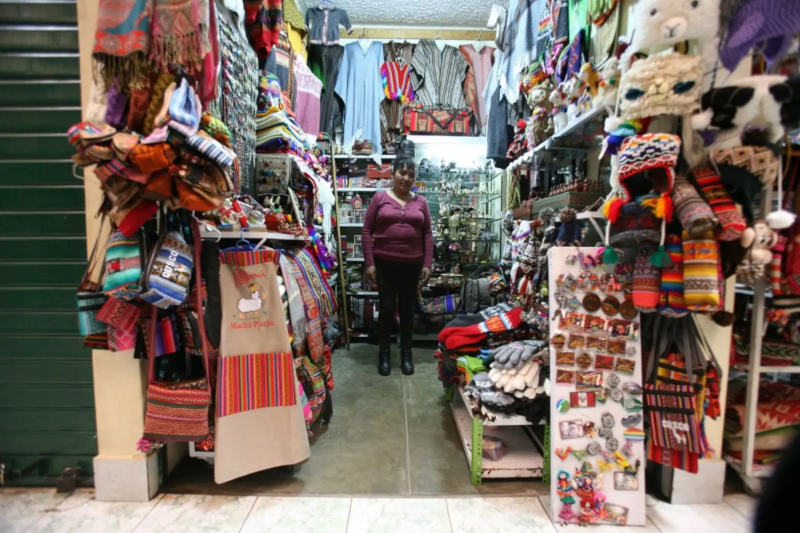
Alternatively, go to Centro Artesanal Cusco to get standard souvenirs. This tremendous indoor facility crammed with stalls of colorful blankets, ponchos and souvenirs. It is a diverse and large volume under a single roof. Negotiating is normal and hence bargain amicably.

Imagine that San Blas is a boutique and Centro Artesanal a souvenir superstore. Nevertheless, the market adventure is not bound at the city boundaries.

Day Trip Destinations: Exploring the Sacred Valley’s Famous Markets

Travel to Sacred Valley to be able to experience markets in a bigger magnitude. Arrange a day out to a market tour to make shopping a cultural experience. There are two outstanding towns, Pisac and Chinchero.

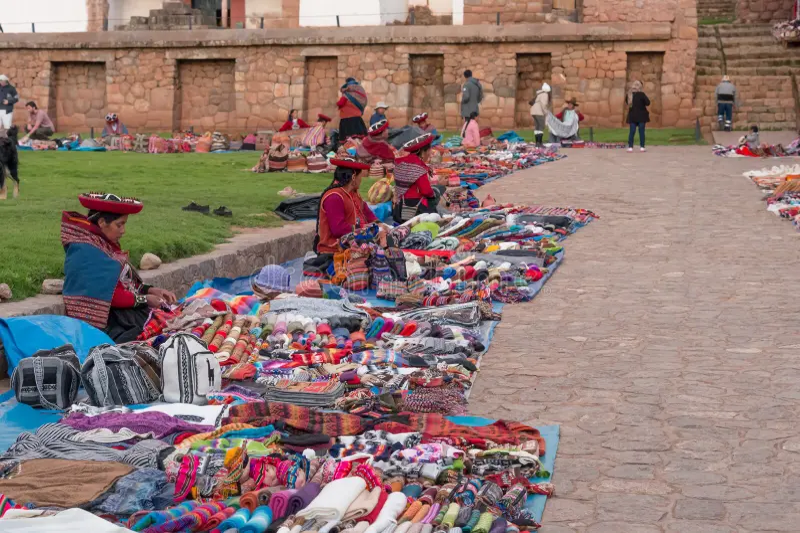
First of all, go to the popular Pisac Sunday Market. Vendors of the surrounding communities come to the plaza on Sundays and sell produce and souvenirs. Though there is a smaller version that operates on a daily basis, Sunday presents the greatest event. You are able to observe locals and go through interminable stalls and enjoy the lively environment. It combines tourism and an experience of real community life.

The second stop is to visit Chinchero in search of an even greater textile adventure. However, whereas its Sunday market is a tourist attraction, the weaving cooperatives are the highlight. Local women show the way they provide wool and make natural dyes using plants, insects and minerals. By visiting the crafting rooms and purchasing handmade products, you can be taught directly by the craftsmen and purchase their high-quality products.

Both towns are covered by many travelers in a Sacred Valley tour. But, when you have to decide, spend your time at Pisac to see the show and to Chinchero to hear the historical tale. Regardless of whether you have to go shopping in a big valley market or a small Cusco store, make your way though, feeling assured and inquiring.

cusco local markets

The Ultimate Market Survival Guide: How to Haggle, Pay, and Stay Secure

Entering a well-crowded market in Cusco is sentimental and breathtaking. Nevertheless, by taking a few local regulations into consideration, you will be confident shopping. Negotiation is a part of the game and the majority of the sellers like it. Therefore, haggling should be taken as a negotiation and not a fight.

  • Step 1: To start with, smile and be polite. Then enquire about the cost: ¿Cuanto cuesta?
  • Step 2: Next, offer a lower price. Being a guide, I recommend the first task be reduced by 20-30 percent.
  • Step 3:  The goal would be a reasonable percentage of 10-15% off. Once you agree, you close the deal.

Once you have settled the price, prepare to pay. In Cusco’s markets, cash rules. Not many suppliers will accept credit cards, so bring Peruvian Soles (PEN). Above all, carry little bills and coins. Most vendors do not have change in the form of 100 or 200-sol notes. 

In the meantime be careful in crowd places. The markets are alive and on-the-fly and busy. In that way, carry your backpack or purse on the front that you see. Now you must be watchful and have a good time. When you have finally grasped your new treasure, there is one last detail that needs to be paid attention: quality.

The Real Deal: Identifying Authentic Alpaca and What to Pay

Some of the colorful items that the shoppers seek include an original alpaca sweater. It will be covered with signs of “baby alpaca”, but don’t worry. The term is however not applied to baby animals. Rather it talks of the lightest alpaca in the first shearing of an adult. Consequently, it is warmer, light and costlier. The fact is the reason why you can find different prices and be able to go shopping with genuine Peruvian handicrafts.

Then, how do you spot the real thing? First, use the “cool touch” test. The true alpaca wool is a little cold, even in a hot market. A pure alpaca sweater is cool and soft. Conventionally, acrylic or wool products are warmer, scratchier, or sticky. This simple test is a way to avoid the majority of fakes.

Then establish achievable price expectations. You can have less finding smaller pieces of alpaca blends. Nonetheless, a real, good or high-quality baby alpaca sweater typically ranges between 250 and 400 Peruvian Soles (approximately 70-100 USD). When a seller sells a sweater that says 100 percent baby alpaca and sells it at S/ 80, that will be a synthetic mix. Once you understand the normal range, you make the right judgement and you spend a reasonable price on a permanent item.

Your Cusco Market Mission: A Final Checklist for Success

Initially, the market chaos in Cusco can appear without organization. At this point though you are clear and in the right frame of mind. You no longer go searching for souvenirs. You seek rather the true pulse of the city.

This is not only a shopping experience. It builds connection. Then select your market first San Pedro. Then try a fresh juice and carry small bills. When you bargain, smile. Be respectful like an exchange, not a fight.

Being a tourist is something out of the way with this approach. You are instead an inquisitive ready-to-go wanderer. It makes you use your senses, get to know the story behind any woven piece of cloth and any smiling face.