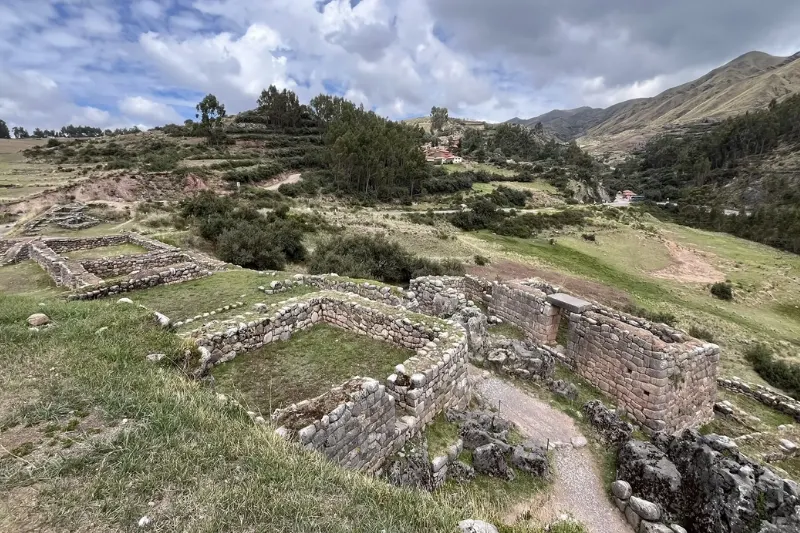
Seven kilometers. That is all that separates central Cusco from one of the least understood sites in the entire region. Most people never make it out there. The ones who do usually wish they had gone sooner. Puka Pukara does not look like what the photographs suggest, and the history behind it is considerably stranger than a fortress has any right to be.

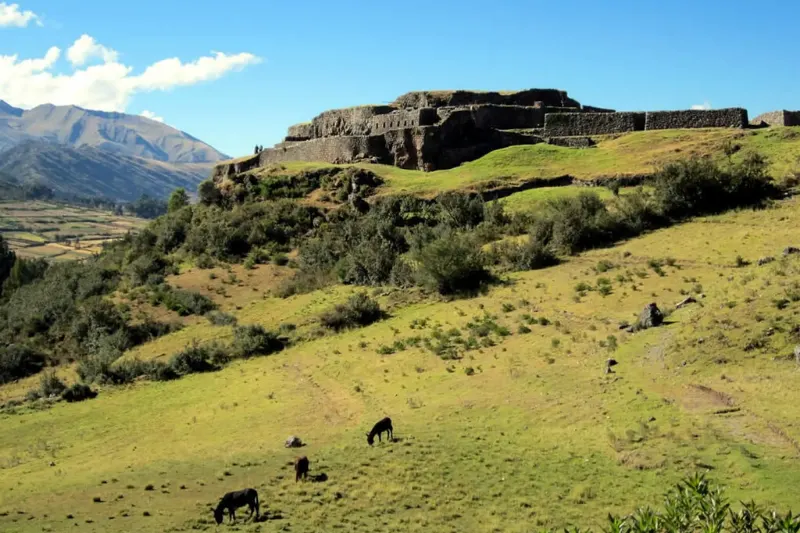
Red Fortress. That is the direct Quechua translation of Puka Pukara, and for once a historical name actually describes what you see. Iron-rich limestone built these walls, and when the late afternoon sun hits them between 4 and 5 PM, the stone turns a color that photographs never quite capture accurately. Midday visits miss this entirely.
The elevation sits around 3,580 meters, which places the site above Cusco itself rather than below it. Guards positioned here could see everything approaching the capital long before it arrived. That was the point. Geography made this location useful before anyone had laid a single stone.
Puka pukara cusco gets classified as a military administrative checkpoint, which sounds bureaucratic but was genuinely important. Everything moving between Cusco and the Antisuyo, the Amazon-facing quadrant of the empire, passed through here. Goods got counted. Travelers got checked. Military units moved through on record.
When the Inca emperor traveled to Tambomachay, the royal bath complex sitting just minutes away on foot, his military escort stayed at puka pukara cusco. That arrangement was standard. The two sites functioned together as a single operational unit for most of the empire’s peak period.
The Qhapaq Nan, the great Inca road system, ran through this location as well. Chaskis, the running messengers who kept the empire connected across thousands of miles, rested here between legs. Goods got taxed. Nothing entered Cusco without some version of clearance from this checkpoint first.

The puka pukara archaeological complex does not look like Machu Picchu. That surprises people. The stonework is rougher, less fitted, more irregular in ways that become obvious within the first few minutes of walking through. Some visitors assume this means the site is less significant. That reading is wrong.
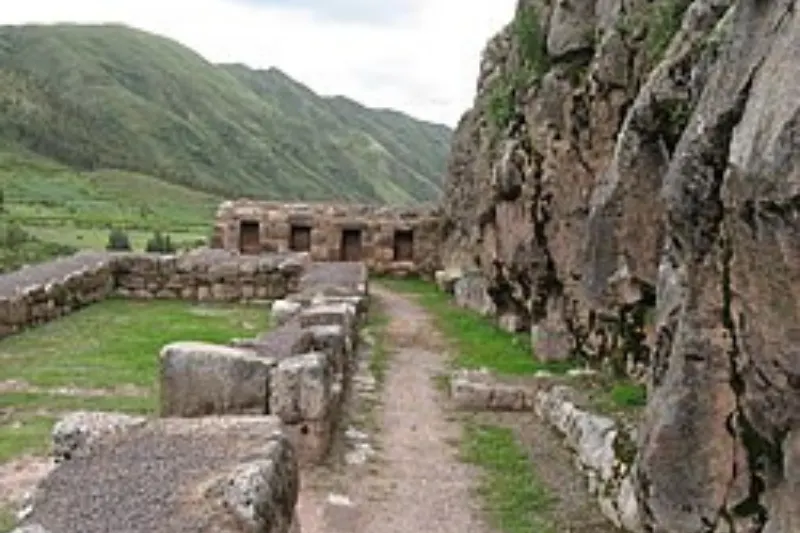
Military outposts got built fast. The puka pukara archaeological complex was never meant to impress visitors or honor deities. It was meant to hold, to function, to process the constant movement of people and goods that kept the capital running. The builders worked directly with the natural bedrock rather than quarrying and fitting stone the way royal sites demanded.
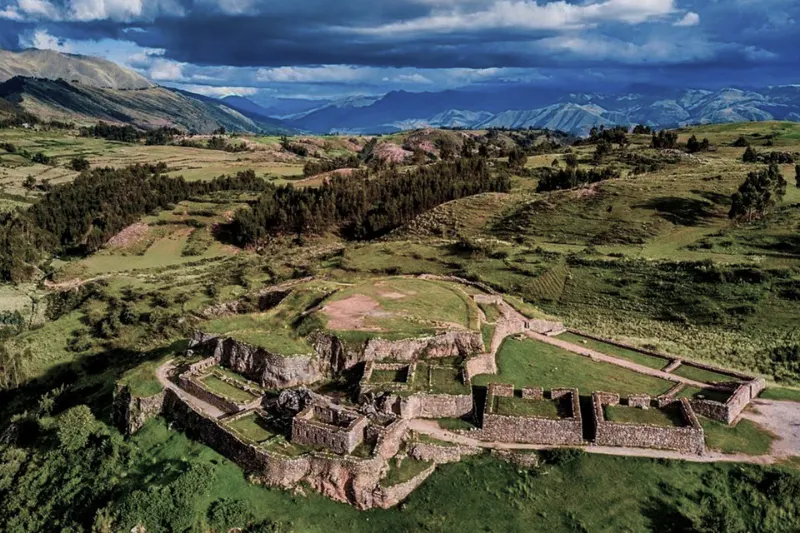
Three tiered levels define the puka pukara archaeological complex, each one backing up the one below it if a breach happened. The upper terraces gave sightlines across the entire Cusco basin. Internal plazas handled the administrative side, taxation, troop assembly, record keeping.
The puka pukara ruins feel like a labyrinth from the inside. Inner plazas feed into terraced walls, stone staircases drop into aqueduct channels, levels connect in ways that take time to map mentally. The watchtower positions are the standout feature. Few places in the region matched this site for unobstructed sightlines in every direction.
Scale is not the strong suit of the puka pukara ruins and nobody should expect Sacsayhuaman. What the site offers instead is legibility. The defensive logic is readable without a guide explaining it. The tiers make sense, the entry points make sense, the positioning makes sense in a way that the larger, more elaborately constructed sites sometimes obscure.
Travelers seriously focused on exploring the majestic inca ruins in Cusco find that the puka pukara ruins fill a gap the famous sites leave open. The operational history of the empire, how it moved goods, controlled borders, maintained checkpoints, none of that comes through anywhere else in the region as clearly.

No standalone ticket covers puka pukara cusco. The Boleto Turistico del Cusco is what handles entry, and two versions include this site:
Three realistic ways exist to get from the city out to the site:
The afternoon City Tour Cusco is the most common way visitors end up at Puka Pukara. Hotel pickup, a loop through the main perimeter ruins, done in a few hours. A standard City Tour Cusco runs through these stops:
Independent travelers often start at Plaza de Armas Cusco before heading out, since the square works as the practical hub for catching transport and meeting guides. From there a downhill hiking route connects Tambomachay, Puka Pukara, Qenqo, and Sacsayhuaman through farmland, alpaca pastures, and eucalyptus groves at a pace that no tour bus allows.

May through September. That is the window that makes visiting the puka pukara ruins straightforward. Dry season skies stay clear, the walking stays dry, and the late afternoon light that produces the red glow arrives reliably rather than behind cloud cover. Outside those months the site is still visitable but conditions get less predictable fast.
Cusco Altitude Sickness is not a minor footnote here. Puka Pukara sits above the city, and uneven stone surfaces combined with steep inclines on top of already thin air is a combination that catches people off guard regularly. Two days of acclimatization in Cusco before attempting the ruins is the single most useful preparation available. After that:
Top 10 Hotels to stay in Cusco vary considerably depending on what the trip needs. Colonial mansion conversions near the historic center put everything within walking distance. Boutique properties in San Blas trade convenience for atmosphere and proximity to the hillside sites. Location matters more than most hotel reviews acknowledge when the goal is moving efficiently between ruins each day.
Cusco Local Markets belong in the itinerary alongside the archaeological sites. San Pedro near the center and the artisan stalls around San Blas show daily Andean life in a way that no ruin can replicate. Buying supplies for a day hike there, eating local food, watching the market function as a working place rather than a tourist attraction, all of it adds context that makes the historical sites more readable afterward.
Puka Pukara is not competing with Machu Picchu. Not trying to. The scale is different, the spectacle is different, the whole register of the site is different. What it offers is something harder to find elsewhere in the region: a clear, readable example of how the Inca Empire handled the unglamorous work of actually running itself.
Checkpoints, road networks, taxation, military logistics. None of that shows up at the famous sites the way it shows up here. Adding Puka Pukara to a Cusco trip does not just add another ruin. It changes how the other ruins read once you have seen this one.

The name comes from the iron-rich limestone in the construction, which catches late afternoon light between roughly 4 and 5 PM and produces a deep crimson color across the walls that looks nothing like the site does at any other point in the day, most reliably visible during dry season from May through September when cloud cover is minimal.
Puka Pukara operated as a military administrative checkpoint on the routes between Cusco and the Amazonian territories, served as encampment for the emperor’s escort during visits to nearby Tambomachay, and functioned as a taxation and inspection station on the Qhapaq Nan where the empire’s running messengers rested between routes.
The puka pukara archaeological complex uses rougher, more irregular stonework than the polished masonry at ceremonial locations, organized into three defensive tiers with elevated watchtower positions and internal administrative plazas, built for speed and military function rather than the aesthetic precision that royal and ceremonial construction demanded.
Entry to puka pukara cusco uses the Boleto Turistico del Cusco, either the one-day Circuit 1 Partial Ticket or the 10-day Full Ticket, reachable by colectivo from the Huerto bus stop toward Pisac, private taxi from the main square with negotiated round-trip fare, or through an organized City Tour Cusco covering the perimeter ruins in sequence.
The downhill route from Tambomachay through Puka Pukara, Qenqo, and Sacsayhuaman passes farmland and alpaca pastures and is genuinely worth the effort, though at 3,580 meters elevation visitors should spend 24 to 48 hours acclimatizing in Cusco first, drink water consistently, use coca tea for symptoms, and carry layers, sun protection, and shoes with solid grip on uneven stone surfaces.