Planning a trip to the Andes creates excitement, but the logistics often cause confusion because you cannot simply drive to the gates. Unlike most global landmarks, the pavement ends deep in the Sacred Valley, making a train from Cusco to Machu Picchu a necessity rather than just a scenic perk. The following Cusco to Machu Picchu Train Options guide will make the booking a lot easier, as it will guide you on the steps to follow and compare various trains in Machu Picchu.
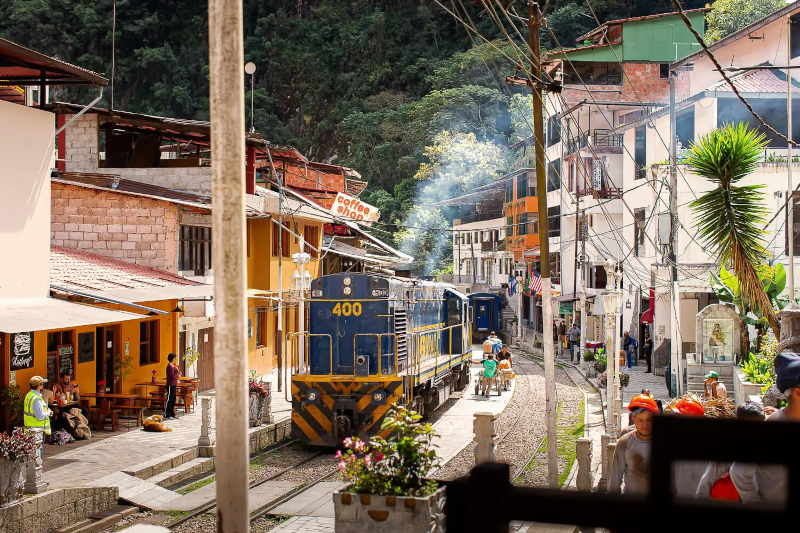
Imagine the journey to be like a relay race of travellers on the route Cusco to Machu Picchu. It usually begins with the transfer of vehicles to outlying stations such as Poroy or Ollantaytambo, then the trail on rails assumes control over the last, roadless portion to Aguas Calientes, the town on the riverside also called Machu Picchu Pueblo.
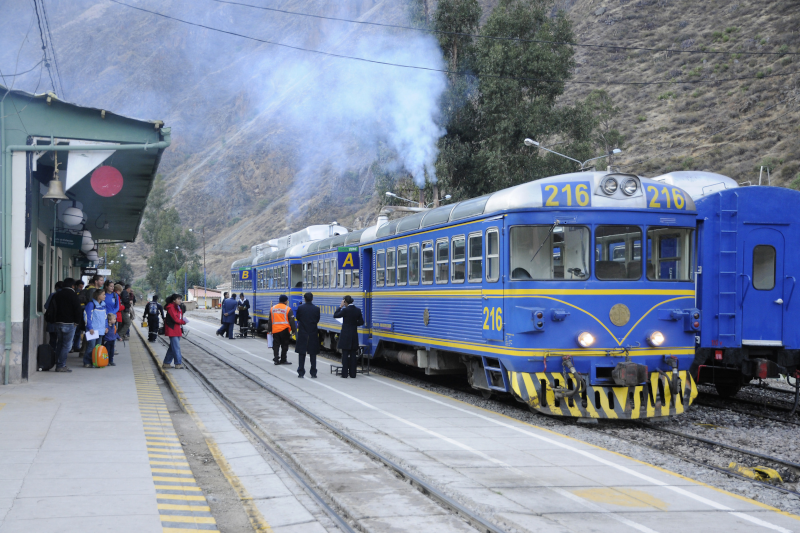
There are two main operators called PeruRail and Inca Rail that operate these routes management and majority of Machu Picchu trains. Their different departure hubs and level of service is the only way to make sure that your ride is an experience and not a hassled ride.
Reaching Machu Picchu requires a transfer from Cusco to Poroy or Ollantaytambo, then a train to Aguas Calientes (with bimodal bus+train options simplifying connections). Choose between PeruRail (more departures) and Inca Rail (more modern feel), with tiers ranging from budget (Expedition/Voyager) to panoramic mid-range (Vistadome/360) and the all-inclusive luxury Hiram Bingham. To enjoy it the most, make sure to travel during the day and have a view, tight 5kg carry-on restrictions, book through the official sites, not the final train home. Look and fit your hotel location with the correct station, and book 2-3 months in advance to get seats and panorama windows.

If you search for tickets departing from “Cusco” for any to Machu Picchu, you might be surprised to find that the train tracks generally don’t run through the historic city center or the Main Plaza. Majority of the visits in fact commence at one or two principal centers: Poroy which is just outside of the city and Ollantaytambo which is in the depths of the Sacred Valley. By picking the wrong starting point you may just add some unanticipated hours to your travelling day hence knowing the geography is a start to you having a smooth itinerary.
As a solution to this disparity without the logistical hassles, the two rail operators have introduced services dubbed Bimodal where the service works as if it were a continuous relay race using a single ticket. In Cusco, you take a private bus which gets you to the entrance of the station where you then board the rail cars to get you to the last part, the train to Aguas Calientes. This choice will remove stress levels, negotiating with a taxi driver or fearing your trip will be haste, and your connection will not be lost.
The choice between the two hubs is usually defined by the number of hours that you will like to spend on the rails or the road. These are transit failures to keep in mind in the bookings:
Having chosen the point to leave, the next difficulty is to decide on the appropriate level of comfort during the journey.
Once you know your departure point, you face a choice between the two primary operators: PeruRail and Inca Rail, the companies behind the train from Cusco to Machu Picchu for most travelers. Although the two companies operate on the same track, the two companies vary in terms of their operational strengths. PeruRail typically has more frequent departures and thus is able to accommodate stricter schedules as compared to Inca Rail, which positions a more contemporary, boutique environment at reduced prices.
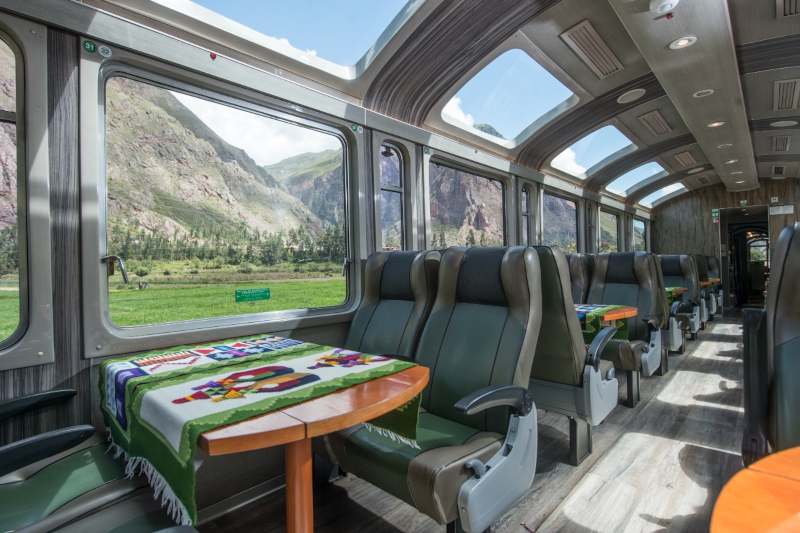
The no-frills offerings of PeruRail and Peru quantas Inca Rail, PeruRail Expedition and The Voyager respectively, offer a good value without seeming cheap to travelers looking for this kind of value. They both have a comfortable four-seat set up around tables and large windows that afford a spectacular view of the Urubamba River passing by the tracks. The primary distinction is the soft product: PeruRail borders its rustic and Andean style, and Inca Rail is more contemporary and clean.
At the standard level, the distinctions break down as follows:
While these standard carriages are comfortable, they do not give the vertical view as the improved levels. In case the immense heights of the mountains seem above the rail, considerable amounts of the special advantages of the Vistadome class as compared with the Expedition train classes, or the jump off Inca Rail Voyager as compared with the 360 service, will serve to close your book.

Climbing to the intermediate level on Machu Picchu trains makes the trip a worthwhile experience as it is not just a commuting case anymore and an experience with sightseeing. PeruRail’s Vistadome and Inca Rail’s 360 train pioneer panoramic travel with curved glass ceilings that extend views toward the cliffs. For photographers, this structural design justifies the higher price, as it allows them to capture dramatic scenery that rises high above the tracks rather than sitting at eye level.
In addition to architecture, these services include cultural performances to break up the ride, including the Saqra dance so popular in Vistadome or the exterior observation deck of Inca Rail. The timing is however very important in order to enjoy the full value of these scenic rail routes through the Sacred Valley. The sun sets before sunset in the Andes so the most decent time of the day to take the train to Aguas Calientes in order to view something is to take the first train in the morning back in the evening you have to pay to have panoramic windows that you cannot see.
Finally, the additional price is a worthwhile investment in case you value photography and daytime travels, and this financial addition provides a tangible improvement of atmosphere. However, travelers celebrating a milestone and seeking more than premium economy can choose the next level, which offers a no-compromise experience with white-tablecloth meals.

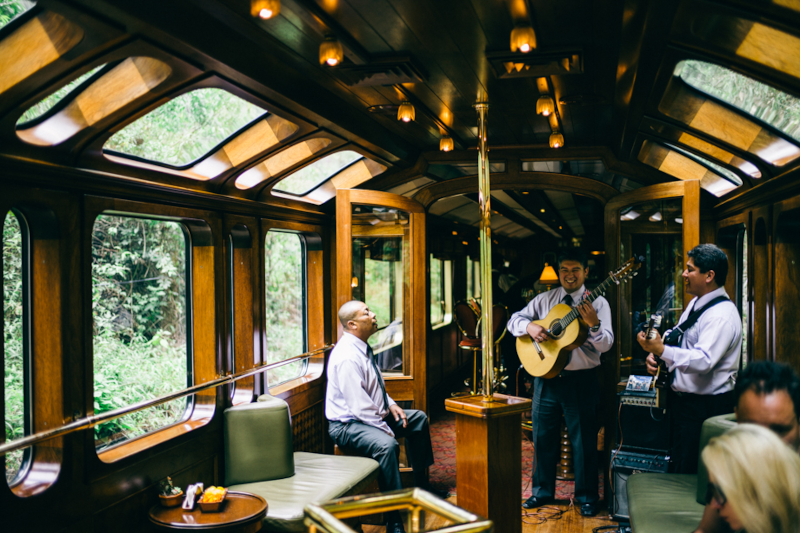
The Hiram Bingham luxury train experience is on a different plane altogether like those who want to make the transit a point of interest in the trip. This is not an exhibition, it is a moving restaurant of the 1920s Pullman style. Instead of sitting and waiting for arrival, passengers enjoy live music and cocktails, then dine in comfortable armchairs at white-tablecloth restaurants while the Urubamba River curls beyond the windows.
The Belmond Hiram Bingham all-inclusive itinerary is also very expensive, but its price covers the costs that other travelers ought to pay on a case-by-case basis. The ticket exists on nearly all of the logistical nightmares of the end leg of the trip:
If you are celebrating a honeymoon or anniversary, the seamless service is worth the splurge since you are paying to eliminate the tension of organizing the trip. Nevertheless, irrespective of the type of train you use; budget or luxury, all train companies are strict with what you will carry with you on board.
The majority of the travelers are appalled to hear that both PeruRail and Inca Rail have an unforgivable 5kg (11 lbs) carry-on square, imposeable per passenger. Since these carriages are designed in such a way that panorama and not the capacity of the carriers is the priority, there is no way that large suitcases will fit in the car. The traveler needs to leave their full-size luggage behind at the hotel at Cusco or Ollantaytambo, and just leave a small daypack with you when you arrive at the ruins.
It is always better to book your tickets via the websites of the operators and to avoid markups imposed by a third party. When making a booking online, be very attentive to the refund policy that serves your fare class. Promotional tickets are comparably less costly however have zero flexibility in case of a change of itinerary owing to weather or flight postponements.
As much attention is needed when packing besides timing your return trip. Using the final train between c and Cusco is a risk, since there are no guarantees that the buses which go down to the citadel will depart on time and is liable to deceive one into missing a tight connection. The later departure in the middle of afternoon will provide a much safer cushion and will enable you to have a rest in town instead of rushing to the platform.
The journey between Cusco and the cloud forest does not have to be a riddle to the Cusco to Machu Picchu portion of the trip anymore. The right hotel location/station and fitting service class to your personal style transforms a complicated logistical dilemma into an unafraid schedule. The ambiguity of the travel is replaced by the mere adventure of the travelling ahead.
The last thing I would do having chosen your route is to execute. Scenic trains in Machu Picchu are usually sold out in advance, and one needs to make the reservation minimum two to three months before the visit to be guaranteed of the panoramic windows. Book your tickets in advance and anticipate a voyage that will give you the same kind of experience as the ruins themselves: needless to say that the Andean scene will remain with you as long as you remember the trip.

You can’t drive to the citadel—pavement ends deep in the Sacred Valley—so a train is effectively required for the final, roadless stretch. The typical journey is a “relay”: start with a vehicle transfer from Cusco to either Poroy or Ollantaytambo, then take the train to Aguas Calientes (Machu Picchu Pueblo). Both PeruRail and Inca Rail offer convenient “Bimodal” tickets that bundle a Cusco bus transfer to the station with a guaranteed train connection, removing taxi hassles and timing worries.
Choose depending upon your time and place. Travelers can reach Poroy with a 30-minute taxi ride from Cusco, followed by a 3.5-hour train journey—an ideal option for those who want to spend more time on the scenic route. Alternatively, travelers can reach Ollantaytambo from Cusco in about 1.5 to 2 hours by bus or taxi, followed by a shorter train ride. This option offers greater convenience, especially for those already staying in Ollantaytambo or looking for more flexible schedules. Making a wrong hub could be a matter of hours, hence align your hotel site with the station and for a hassle free transfer; consider Bimodal service.
Yes–but if you like photography and scenery. Vistadome and The 360 have panoramic glass ceilings that expose towering cliffs above the tracks, and cultural features (e.g. Saqra dance at Vistadome, outdoor observation tower at Inca Rail). The upgrade is worthwhile during the day, particularly on a morning flight; on a flight back, in the evening, the upgrade nullifies the benefit as you cannot see anybody. In case you are not very expensive, even regular classes ( PeruRail Expedition, Inca Rail The Voyager) will have big side windows and strong comfort.
The Belmond Hiram Bingham transforms the ride into an upgraded 5-star journey: live music, cocktails and white tablecloth meals in 1920s Pullman-style cars as the Urubamba River passes by. Its comprehensive price includes a fine meal with open bar, the bus to the citadel, Machu Picchu admission tickets, and a personal guided tour, which its rivals have to charge individually. It is best suitable during honeymoons, anniversaries, or whoever is ready to spend more money and do away with the coordination stress and make the entire journey a journey to remember.
Pack light: the operators have introduced a stiff carry-on 5 kg (11 lb) limit due to simple lack of storage in panoramic cars. Leave giant suitcases at your hotel either in Cusco or Ollantaytambo and only carry a little day-pack of ruins. Reserve online, and read terms and conditions of fares-combo tickets are even cheaper, but are generally non-refundable. Do not take chances on the last train; buses are heading down out of the citadel, and are apt to make you miss your train. Return mid-afternoon is ideal; book 2-3 months ahead to ensure the reservation of seats and panoramic windows.